Contents
Professional event tents uplift the quality of any outdoor venue. Event tent installations support a wide range of functions, from trade shows and corporate events to festivals, sporting events, community gatherings, and promotional marketing campaigns. Including food vendor tents, they not only provide cover for valuable equipment and strengthen brand imagery; they create a safer, more inviting environment for all attendees. Yet, even a high-grade event tent is of little use if set up improperly.
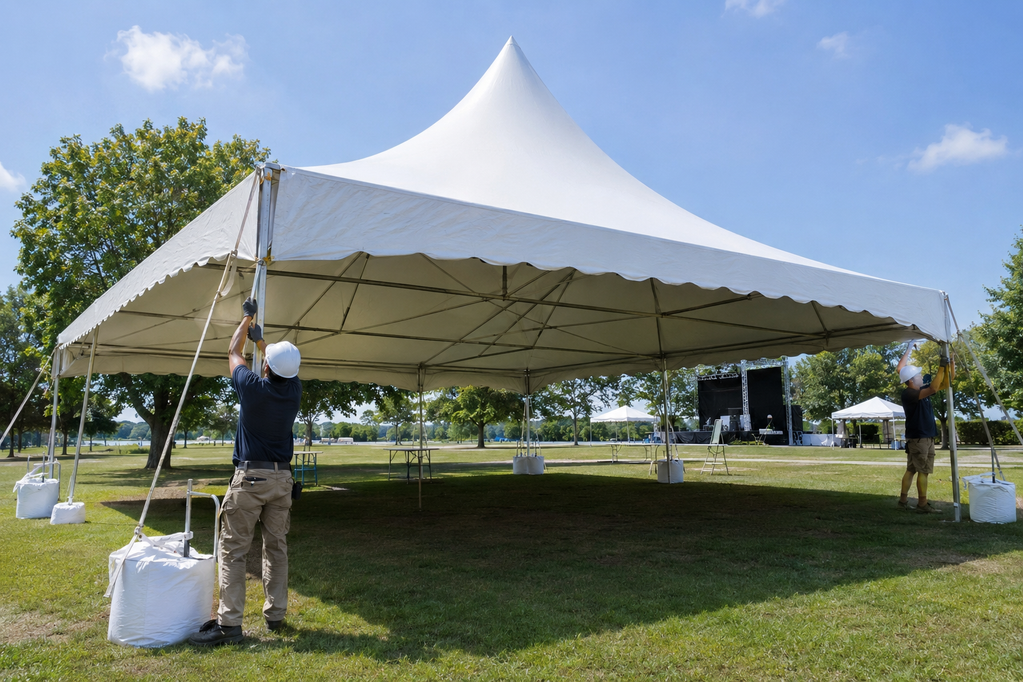
Installation issues during setup day can cause inconvenient delays, safety hazards, product damage, or added expenses. Uneven terrain, poor anchorage, missed pieces, sloppy assembly, and inclement weather have all been known to compromise event tent stability and appeal. Custom promotional tents are built for reliable outdoor performance, but careful preparation during setup is all it takes to make sure that quality shows at every event.
Every tent erection relies on step-by-step, methodical assembly. Careful consideration of each aspect, from inspecting equipment to prepping the event site and observing set instructions, ensures installation proceeds smoothly, and presentation is consistently polished for your clientele and prospects.
Professional Event Tent Installation Tips to Ensure a Safe, Stable, and Hassle-Free Setup
- Inspect Your Event Tent Components Before Setup
Pre-setup preparation for the event location begins with your event tent gear.
Before the assembly process for your outdoor tent begins, go over the frame, cover, interconnectors, stakes, anchors, locking accessories, and other components. Double-check for all necessary equipment and look out for the slightest bit of damage or wear. Ensuring complete tent equipment allows for unobstructed installation.
Reliability begins with a proper equipment check.
- Select a Level Setup Surface
How well a tent sits in place depends partly on location choice.
When selecting an installation site, always avoid uneven terrain, holes, loose soil, or standing water whenever possible. Select the sturdiest spot if the issue cannot be prevented by selecting the most level and stable ground in the surrounding vicinity. Also be sure to check whether anything overhead, such as power lines, tree branches, and so on, could pose a risk, and that the site does not interfere with any on-site access or security.
Choosing the right space is the groundwork for safety.
- Follow Tent Frame Setup Instructions Carefully
Installations must follow a pattern from start to finish.
Carefully extend the tent framework without exerting excess pressure on any connections while adding cover with proper fasteners, and pull upward until raised evenly. Working in a steady, uniform manner prevents the event tent framework and fabric from stressing unnecessarily.
Correct installation is the first part of equipment longevity.
- Secure Your Tent Properly
External environment safety begins with your structure.
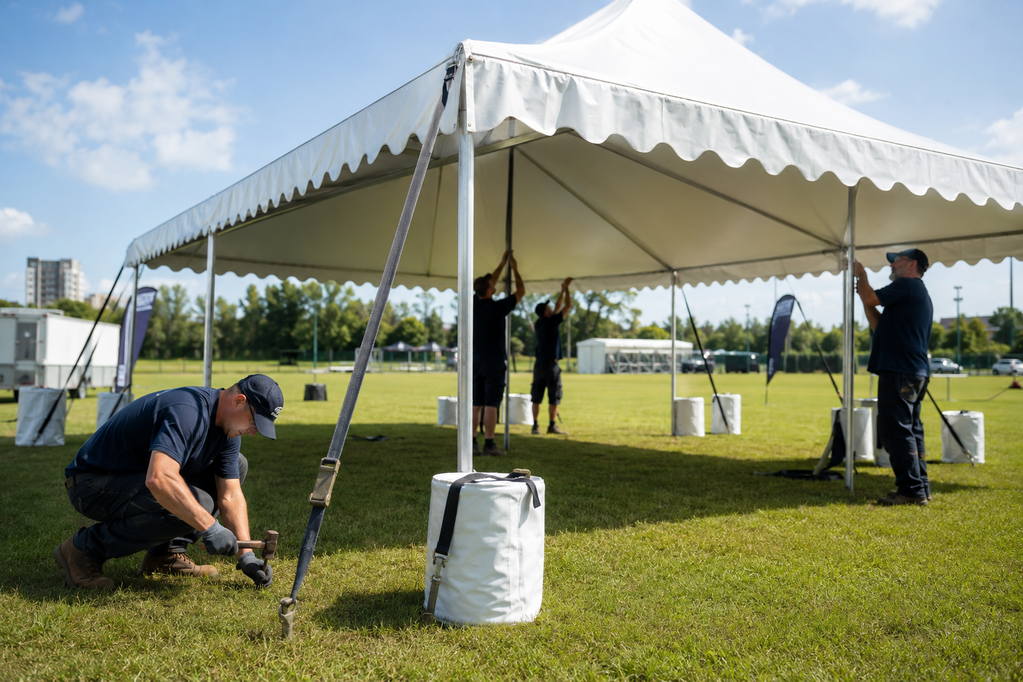
Attach your tents solidly with weight bags, stakes, or tie-down systems to resist movement and wind in varying climate and weather scenarios. Well-anchored event tents provide improved safety for visitors as well as for those who set up the structures outdoors.
Strong anchoring protects the entire installation.
- Monitor Local Weather Conditions
Outdoor event tent structures remain susceptible to external elements.
Be aware and update with local weather forecasts daily. Make any necessary corrections to a tent, for example, by using additional stakes for tie-downs or by placing more bags around for stability, even on a windy day or when using weights on their own.
Watch for potential wind and other conditions.
- Conduct a Full Equipment Safety Check After Setup
Before inviting the public into your event space, complete a full inspection to confirm structural soundness.
Check all portions of the frame, connectors, locking mechanisms, and weights to make certain the framework is properly fastened together before event attendees start to enter. For added security, also check the anchoring stakes, ties, and weight systems before your doors open. Taking an extra moment to fasten down banners, promotional products, lighting, tent displays, and custom inflatable arches, alongside the tent, will guarantee an impressive and professional-looking event space.
Double-checks add an extra measure of security.
Installations may vary, but skill sets should not, which means having experienced individuals available for work during tent installations and dismantling is a must. Provide them with hands-on training on basic assembly and disassembly processes, equipment safety protocols, best operating practices, and handling emergency situations to ensure proper installation and maintenance.
Experienced staff help installations run smoothly and reduce equipment wear through well-practiced procedures.
A clean event tent installation helps extend the tent’s lifespan. Following every event, disassemble and clean equipment carefully. Then inspect each individual component. If there has been wear and tear, replace it before storing away so the tent structure is at its best when it is time for another event.
Routine checks save and restore your equipment.
Final Thoughts
Putting up event tents is about more than just getting great hardware to the site. Properly maintained tents and an easy installation, from setup in an even place to stable support of the structure against the elements, as well as professional training, can safeguard against setup problems, protect important equipment, and ensure a superb public experience for years to come.
Investing the time in proper event tent installations allows us to successfully host secure, professional outdoor venues while protecting capital investments and enhancing attendee and visitor journeys. A well-prepared, professionally installed event tent creates more than an impressive temporary space; it ensures reliable, successful operations for years to come.